How to Put On a Baby Carrier by Yourself: Solo Parent Setup Guide
Putting on a baby carrier alone can feel intimidating at first, but with the right design and technique, it becomes second nature. This guide walks you through solo setup steps, safety checks, and what to look for in a carrier built for independent wear.
Why Solo Setup Matters for Modern Parents
Whether your partner is at work, you're running errands alone, or you simply value independence, being able to put on a baby carrier by yourself is a practical skill every parent needs. Traditional H-shaped carriers often require a second set of hands to secure straps and buckles behind your back, leaving solo parents struggling with awkward angles and safety concerns.
The good news is that carrier design has evolved. Modern carriers with X-structure designs and intuitive buckle systems make solo wearing not just possible, but genuinely easy. Understanding the right technique transforms what seems complex into a quick, confident routine.
Step-by-Step Solo Carrier Setup
Follow these steps to safely put on your carrier without assistance:
- Start with the waist belt: Fasten the padded waist belt around your hips first, positioning it at a comfortable height. Look for quick-adjust Velcro closures that you can tighten with one hand while holding your baby with the other.
- Check the hip seat pocket: Many carriers store the upper harness inside the hip seat compartment when not in use. Pull out the shoulder straps and lay them flat across the seat before placing your baby.
- Secure your baby in the seat: With the waist belt stable, place your baby on the hip seat while supporting them with one arm. The firm, wide base should provide immediate stability.
- Pull straps over your shoulders: Bring the shoulder straps up and over, one at a time. X-structure designs let you reach the buckles at your chest level rather than behind your back.
- Click and tighten: Fasten the chest buckle and adjust the straps until your baby sits snugly against you with their weight evenly distributed.
- Final safety check: Ensure all buckles are locked, straps are not twisted, and your baby is positioned in a healthy M-shaped sitting position with knees higher than their bottom.
Features That Enable Independent Wearing
Not all carriers are built for solo use. Look for these design elements that make self-setup realistic:
| Feature | Why It Matters |
|---|---|
| X-structure shoulder straps | Buckles fasten at chest level where you can see and reach them |
| Quick-adjust waist belt | One-handed tightening while supporting baby with the other arm |
| Stable hip seat base | Provides secure platform before shoulder straps are engaged |
| Clear buckle placement | No fumbling behind your back or asking for help |
A Carrier Built for Independence
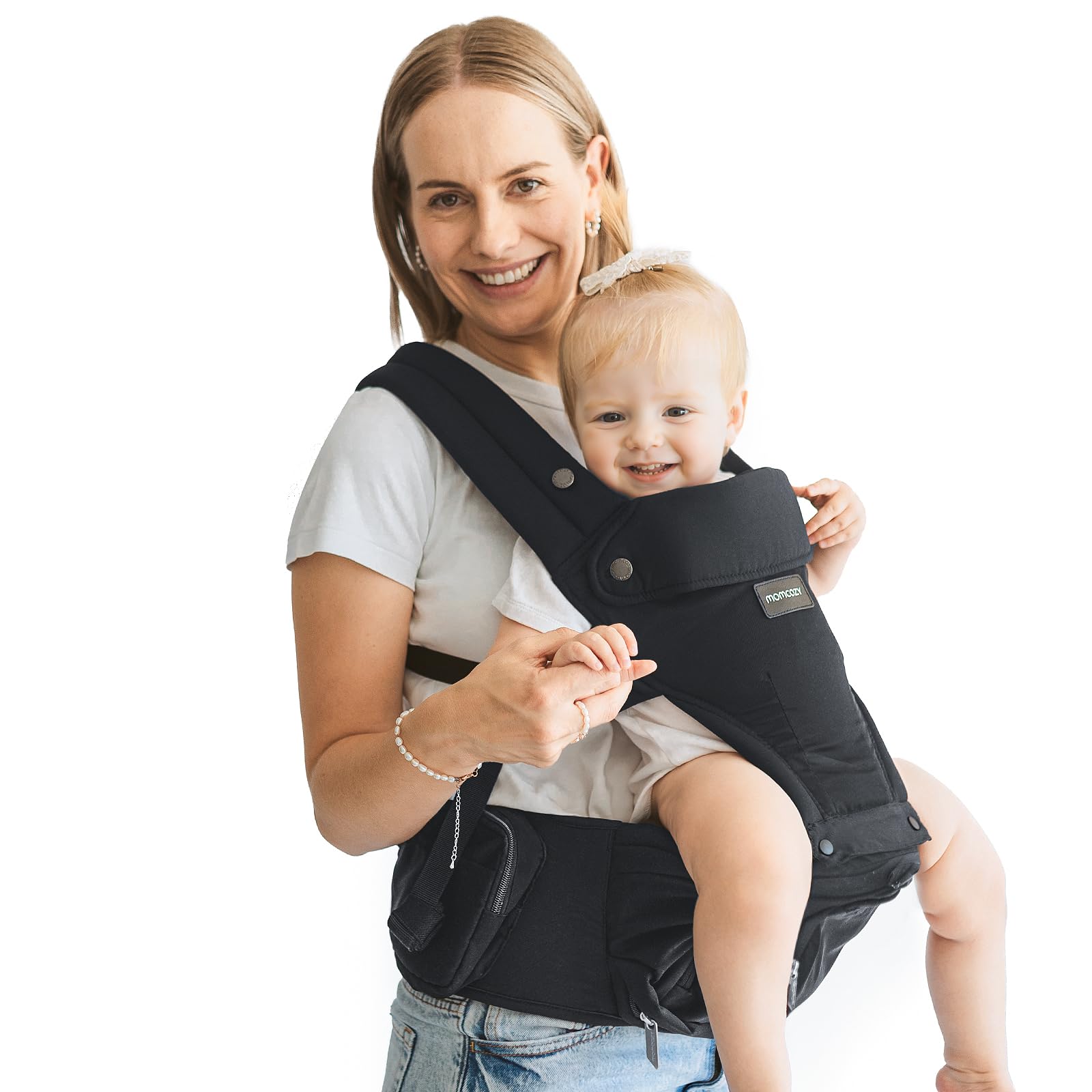
The Momcozy Baby Carrier with Hip Seat addresses the solo parent challenge head-on with its X-structure design. Unlike traditional H-shaped carriers that require help to fasten back buckles, this system allows you to put on and take off the carrier independently in seconds.
The 2-in-1 design supports babies from 7 to 44 pounds across six versatile positions, including hip seat options for cradle, hip, and forward-facing carry, plus full carrier modes for facing in and out and back carry. For babies under five months, the waist seat cradle position provides proper support while you master the solo setup technique.
The 3D contoured waist support distributes pressure evenly across your waist, abdomen, and shoulders, preventing the lower back strain that often comes from carrying weight on one side. The firm, wide seat promotes a natural M-shaped sitting position for healthy hip development, while the 10mm thick cushion absorbs shock during movement.
Built from breathable, skin-friendly material with soft-wrapped edges, the carrier accommodates waist sizes up to 45 inches and works comfortably across all seasons. The quick-adjust Velcro waistbelt and secure buckles create a snug fit without requiring contortionist moves or a helper.
Safety Tips for Solo Babywearing
When putting on a carrier by yourself, safety remains the top priority:
- Always perform your setup on a soft surface like a bed or couch in case you need to set your baby down
- Practice the motions without your baby first until the sequence feels natural
- Double-check every buckle and strap before walking around
- Start with short wearing sessions at home to build confidence
- Keep one hand on your baby until all straps are fully secured
- Make sure your baby's airway is clear and their chin is off their chest
Balanced Verdict
Solo carrier setup is absolutely achievable with the right carrier design and proper technique. While traditional carriers often demand assistance, modern X-structure systems put control back in your hands with front-facing buckles and intuitive adjustment points. The learning curve is minimal, and the payoff in independence and convenience is substantial. Just remember that practice builds confidence, and starting slowly ensures both you and your baby feel secure throughout the process.
Who This Guide Suits
This approach works well for solo parents who frequently wear their baby alone, caregivers who need to get the carrier on quickly without help, and anyone who values self-sufficiency in their parenting tools. It's particularly useful for parents with active babies over five months who want multiple carrying positions without complex adjustments.
Who Should Skip This
If you always have a partner available to help with carrier setup and prefer traditional H-shaped designs, or if your baby is under five months and you're only using cradle-hold positions, a simpler single-position carrier might meet your needs. Parents who rarely babywear or only use carriers for very short periods may not need the full solo-setup capability.
Related Buying Guides
- Jan & Jul Cozy-Dry Baby Carrier Rain Cover Features Explained: What Makes It Weatherproof
- Stroller Fan Not Working? How to Fix Common Clip-On Fan Issues
- How to Clean, Charge, and Care for Your Baby Car Mirror with Night Light
- Baby Led Weaning Spoon FAQ: Everything Parents Ask About the ezpz Tiny Spoon
- Nursing Cover Comparison: Infinity Scarf vs. Rigid Hoop Designs for Different Moms
- Are You Wasting Freezer Space? Flat vs. Upright Breastmilk Storage Compared