How to Keep Your Pressure Mounted Baby Gate Level and Stable
A pressure mounted baby gate that's not level can sag, wobble, or fail to close properly. This maintenance guide walks you through measuring, adjusting, and keeping your gate perfectly aligned for safe, reliable use.
A pressure mounted baby gate depends entirely on proper leveling for stability and function. When your gate tilts even slightly out of alignment, it can sag under pressure, swing unevenly, or lose its grip on the walls. This guide shows you how to check, adjust, and maintain a level installation so your gate stays secure.
Why Leveling Matters for Pressure Mounted Gates
Pressure mounted gates work by pushing outward against two opposing surfaces. When the gate isn't level, that pressure distributes unevenly. The bottom rail may bear more weight than the top, causing the gate to tilt forward or backward over time. An unlevel gate also affects the auto-close mechanism, preventing the door from swinging shut reliably.
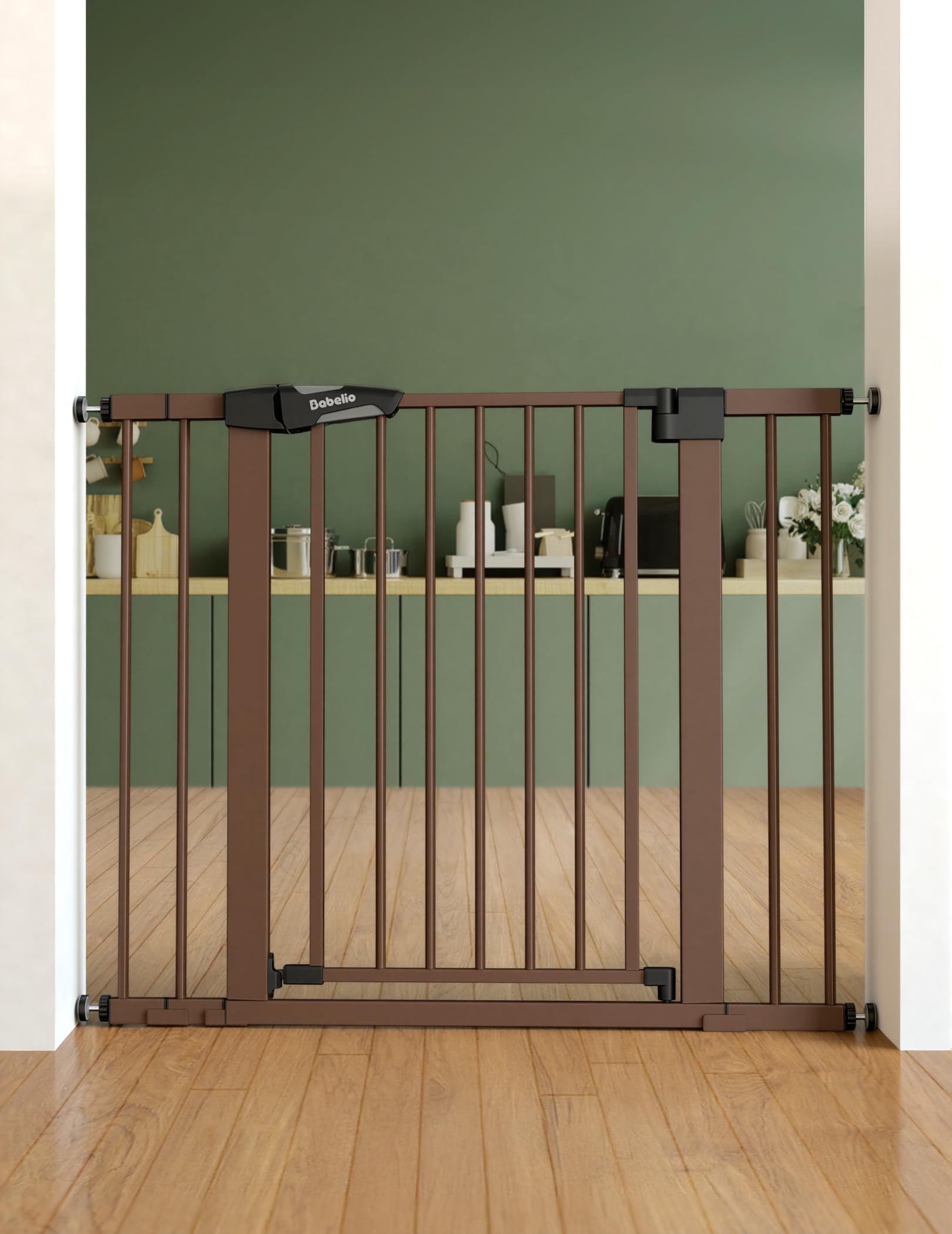
The Babelio Pressure Mounted 26-40" Baby Gate for Stairs, PressGuard I, Brown is designed for openings between flat, sturdy surfaces. Keeping the bottom rail parallel to the floor helps support smooth closing and everyday stability.
Step-by-Step Leveling Process
Start by loosening the pressure adjustment on your gate just enough to reposition it without removing it completely. Place a small bubble level on the bottom rail and check both horizontal and vertical alignment. If the gate tilts, adjust the wall cups or spindle extensions until the bubble centers in both directions.
Once level, slowly increase the pressure while rechecking alignment after each quarter-turn. Tightening too quickly can shift the gate out of position. The metal frame and wide wall cups on the Babelio Pressure Mounted 26-40" Baby Gate for Stairs, PressGuard I, Brown help distribute pressure evenly when the gate is properly aligned.
Common Leveling Problems and Fixes
Uneven Walls or Baseboards
If your doorway has thick baseboards or angled walls, the gate may not sit flush on both sides. Use the included wall cups to bridge gaps and create parallel mounting surfaces. Some installations benefit from shimming one side to compensate for out-of-plumb walls.
Gate Sags After Initial Installation
New gates can settle slightly as pressure compresses wall materials. Recheck level after 24 hours and retighten if needed. This is normal and doesn't indicate a faulty gate.
Floor Slopes Prevent Level Mounting
Older homes often have sloped floors. Mount the gate level to the walls rather than parallel to the floor. The auto-close feature on gates with two-way swing hinges works best when the gate frame remains vertical even if the floor isn't.
Maintenance Checklist for Long-Term Stability
- Check level monthly with a bubble level or smartphone app
- Inspect wall cups for slippage or damage
- Retighten pressure adjustments if the gate feels loose
- Clean contact points where the gate meets the wall to prevent dust buildup
- Verify that the bottom rail remains parallel to the floor
When to Consider Hardware Mounting
Pressure mounting works well for doorways, hallways, and bottom-of-stairs openings between flat surfaces. If your walls are textured, angled, or if you struggle to maintain level alignment, hardware mounting provides more stability. The Babelio Pressure Mounted 26-40" Baby Gate for Stairs, PressGuard I, Brown includes hardware for reinforced installation when pressure mounting isn't sufficient. Hardware mounting is always recommended for top-of-stairs use.
Testing Your Gate After Adjustment
After leveling, test the gate by opening it less than 90 degrees and releasing it. It should swing closed smoothly without dragging or stopping partway. Push firmly on the center of the closed gate to verify it doesn't shift or tilt. The gate is tested to withstand 260 N of horizontal force when properly installed and level.
Verdict
Keeping a pressure mounted gate level is straightforward maintenance that prevents bigger problems. Regular checks and minor adjustments ensure the gate stays secure, closes reliably, and distributes pressure evenly across both walls.
Who This Guide Suits
This maintenance approach works for parents using pressure mounted gates in doorways, hallways, kitchens, and compatible stairways. It's especially useful if you've noticed your gate starting to sag, wobble, or resist closing properly.
Who Should Skip This
If your gate is mounted at the top of stairs or in a high-traffic area where maximum stability is required, hardware mounting is a better long-term solution than ongoing leveling maintenance.
Related Buying Guides
- Jan & Jul Cozy-Dry Baby Carrier Rain Cover Features Explained: What Makes It Weatherproof
- Stroller Fan Not Working? How to Fix Common Clip-On Fan Issues
- How to Clean, Charge, and Care for Your Baby Car Mirror with Night Light
- Baby Led Weaning Spoon FAQ: Everything Parents Ask About the ezpz Tiny Spoon
- Nursing Cover Comparison: Infinity Scarf vs. Rigid Hoop Designs for Different Moms
- Are You Wasting Freezer Space? Flat vs. Upright Breastmilk Storage Compared